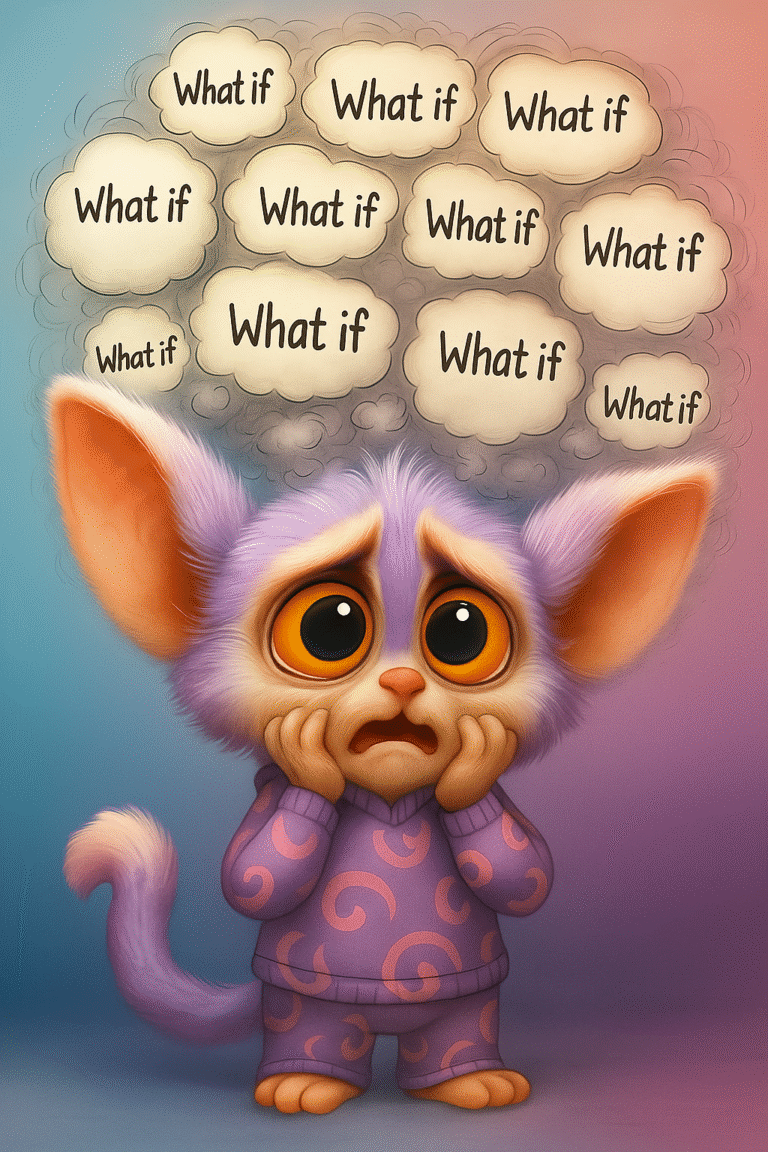

Why Consistency Breaks: The Hidden Link Between Self-Doubt and Self-Neglect
Understanding why consistency breaks requires looking beyond motivation and willpower.
In many cases, inconsistency is the outcome of self-neglect driven by outdated coping systems — creating a loop where self-doubt grows and business growth stalls.
Have you ever stared at your phone and thought, consistency should be easy by now, then immediately followed it with, “Why can’t I just post it?”
You’re not clueless. You’re not lazy. You’re not “bad at business.” You probably even know what to do.
And yet you keep doing that awful little dance: show up, disappear, panic, repeat.
What is inconsistency and how it roots in nervous-system protection
You’ve asked yourself these questions
“Why can’t I just post it?”
“Why can’t I stay consistent long enough for anything to work?”
If those questions live rent-free in your head, it usually means you care. A lot.
It also means you’re stuck in that weird place where you’re capable and committed… but still stopping. Then you judge yourself for stopping. Then you stop more. (Fun.)
You know what to do, but you stop
This pattern is painfully common:
- You start, stop, start again
- You show up, then disappear
- You get momentum, then feel exhausted and behind
And because online business rewards steady visibility, inconsistency doesn’t just feel annoying. It feels like the whole thing is broken.
Feeling behind and stuck
When consistency slips, it’s not just “Oops, I missed a post.”
It’s everything feels stuck. Sales feel unpredictable. Your confidence gets wobbly. You start thinking, “Maybe this isn’t working,” when the truth is simpler: you haven’t been visible long enough for it to work.
How consistency builds trust, visibility, and confidence (research-backed)
Business growth doesn’t come from occasional bursts of effort where you become a content machine for three days, then lie face down on the carpet for two weeks.
It comes from being around regularly. Long enough for people to notice you, understand you, and trust you.
Growth comes from regular showing up
Consistency is what makes your business feel real to other people.
Not flashy. Not perfect. Just present.
Building trust through visibility
People don’t buy from strangers they saw once, liked once, then never heard from again.
They buy when trust builds over time, through repeated, low-pressure contact. The kind that makes someone think, “Oh yeah, her. I like how she explains things.”
The power of steady presence
Consistency gives you:
- Familiarity (you become recognizable)
- Momentum (you stop restarting from scratch)
- Confidence (because you keep promises to yourself)
No magic. Just steady.
The high cost when consistency breaks
When consistency breaks, your business doesn’t just pause. It often backslides.
Sales stall without it
Visibility drives sales. If you disappear, so does your pipeline.
Confidence drains away
Every time you don’t do what you said you’d do, your confidence drains. Not because you’re weak, but because your brain starts treating your plans like empty promises.
Momentum resets to zero
It feels like progress resets.
You come back and think, “Why does it feel like nobody cares?” when really, the thread got dropped. And threads need continuity.
Why it becomes the core business issue
If staying consistent feels hard, it’s not a minor productivity problem.
It’s often the main reason your business isn’t growing yet, because growth needs time in front of the right people.
Why consistency isn’t just willpower — science explains it
A lot of women, especially moms, assume inconsistency means they’ve got a character flaw.
It doesn’t.
Common beliefs women hold
- I’m not disciplined enough.
- I’m bad at routines.
- I just need to try harder.
Why rest and desire don’t fix it
If it was only about effort, then wanting it badly enough would solve it.
And if you’re a mom, you’ve already tried “wanting more” and “pushing harder.” You’ve probably also tried resting… then coming back to the same wall.
That’s the clue. The problem isn’t motivation.
The real culprit revealed
A lot of the time, inconsistency is a self-neglect problem.
And yes, that can show up even when you love your business.
What self-neglect really means (and what it doesn’t)
Self-neglect isn’t “I don’t care about myself.”
It’s “I’m building this business on fumes and calling it normal.”
It’s not about not caring
You can care deeply about yourself and still run your life like you’re an afterthought.
Most moms were trained to.
Business built on skipping basics
Self-neglect can look like skipping meals, not drinking water, holding your pee for two hours (because you’re “just finishing this one thing”), and acting like that’s a solid growth plan.
It’s not. It’s survival.
Pushing through without limits
It can also look like:
- Working through exhaustion
- Ignoring resentment (until it leaks out sideways)
- Saying yes when your whole body is screaming no
You might be “making it work,” but you’re not supported.
Working in stolen moments
Many moms build businesses in stolen moments between school runs, after-school snacks, and whatever mysterious sticky substance just appeared on the kitchen counter.
The issue isn’t that you have limited time. The issue is when you never account for your real capacity inside that limited time.
Coping isn’t true support
Here’s the line that hits hard: coping means you didn’t fall apart. It doesn’t mean you were supported.
Coping is white-knuckling your way through.
Support is building something you can actually repeat.
If your system relies on coping, it will eventually break.
How unsupported systems fail (and why self-doubt shows up)
When you’ve been unsupported for too long, self-doubt isn’t some personal failing.
It’s a predictable response.
Unsupported leads to self-doubt
If you keep trying to be consistent while ignoring your basic needs, your brain starts associating your business with danger.
Not drama-danger, but nervous system danger: “This pace costs too much.”
If you want a wider look at how mom guilt and self-doubt feed each other, this piece may feel familiar: A mompreneur’s guide to conquering self-doubt and guilt.
Your body learns “my needs don’t matter”
When your body learns my needs don’t matter, it also learns something else:
“I can’t trust this pace.”
So you hesitate. You procrastinate. You overthink. You scroll instead of posting. You go quiet.
Not because you’re broken, but because your system is trying to keep you safe.
Pace feels unsafe
The real problem is pace.
If the only way you know how to be consistent is to go too hard, your body will eventually refuse. It’ll pull the handbrake.
Your system pulls back to protect you
That’s why showing up starts to feel heavy. You don’t feel excited, you feel pressured.
Your nervous system isn’t being “dramatic.” It’s protecting you.
Your body’s smart protection mode
You’re not lazy. You’re not lacking grit. You’re having a normal response to an unsustainable setup.
Not lazy, it’s protection
When you feel resistance, it’s often your body saying, “We’re not doing that again.”
Because “that” led to exhaustion, resentment, and the 2:00 am spiral where you swear you’re quitting everything and moving to a cabin.
The classic rest reminder
If you don’t choose time to rest, your body will choose for you.
And your body does not check your calendar first.
Timing is never convenient
Burnout doesn’t arrive politely on a Saturday. It shows up mid-week, when you planned to batch content, and your kid needs a last-minute costume for Spirit Week.
Ancient survival in modern life
That survival system was great when you had to escape a tiger.
It’s less helpful when you’re watching someone online launch their 17th offer while you’re trying to remember if you ate lunch.
The pain of watching others succeed (hello, Perfect Paula)
Comparison hits different when you’re already tired.
Perfect Paula’s effortless wins
There’s always a Perfect Paula online.
She “just felt inspired,” recorded three reels, wrote an email sequence, launched, and casually sold out. Her hair is clean. Her house has natural light.
Sure.
Stuck in the self-doubt mire
Meanwhile you’re stuck in the mire of self-doubt, thinking, “Why is this so hard for me?”
It feels unfair because you’re working hard too.
Why it feels unfair
Because you’re measuring your capacity against someone else’s highlight reel, while ignoring the fact that your nervous system is waving a red flag.
Why sales need repeated exposure
Let’s get practical.
People usually don’t buy the first time they see you. Or the second. Or even the third.
Not on first sight
Most buyers need repetition before they decide, “Yep, I trust her.”
Low-pressure repetition builds decisions
Repeated, low-pressure exposure gives someone time to:
- understand what you do
- see how you think
- feel safe enough to spend money
This isn’t manipulation. It’s how humans build trust.
What those exposures can look like
- First time: “Oh, this is interesting.”
- Second time: “I like how she explains that.”
- Third time and beyond: “Okay, I think I want this.”
If you disappear between step one and step three, you don’t lose because your offer is bad. You lose because the relationship didn’t have time to form.
For another perspective on the confidence side of this, see how to build confidence as a mom entrepreneur.
Patience for trust to form
Consistency is what gives your audience enough “touch points” to choose you without feeling pushed.
It’s slow, until it isn’t.
Special challenges when your audience is moms
If your people are moms, consistency matters even more, because we’re distracted.
Moms are busy and distracted
Your audience isn’t scrolling peacefully with a credit card in hand and a beverage that stays hot.
They’re scrolling while waiting in the car line, half-listening to a tween rant about group projects.
Kids in the background
There’s usually a child somewhere talking in their ear, asking for food, or announcing a crisis that turns out to be a missing sock.
Why moms need your consistency
If you’re serving moms, your consistency helps them remember you exist long enough to take action.
You’re not competing with other coaches. You’re competing with life.
What actually happens when visibility is inconsistent
Here’s the common scenario.
A post resonates, then nothing
Someone sees a post that hits. They think, “Oof, that’s me.”
Then you vanish for weeks.
They move on without deciding
They don’t decide against you.
They forget you, because they had 400 other things happen, including a school email that required five forms and a photo of a utility bill.
Inconsistency means they never saw you enough
This is big: inconsistency doesn’t mean no one wants this.
It means people didn’t see you often enough to choose you.
The frustration of starting over
When you finally show up again, it can feel like you’re back at zero.
Feels like zero progress
You post and hear crickets, so you assume you’re failing.
Not failure, it’s a continuity gap
It’s not because you failed. It’s because trust and familiarity need continuity.
Consistency keeps the thread alive.
Familiarity takes time to build
When you disappear, you’re not “taking a break.” You’re breaking the connection.
And rebuilding always feels harder than maintaining.
Redefining consistency for real life
Consistency isn’t posting 24/7.
It’s being there enough that people can track with you.
Not being everywhere
You don’t need every platform. You don’t need daily reels. You don’t need to become a full-time content robot.
Being there enough
Consistency can be quiet.
It can be one email a week, two posts, and a steady rhythm your nervous system doesn’t hate.
Low-pressure wins
Low-pressure consistency beats high-intensity spurts, because it doesn’t require you to burn down your life to keep going.
The hidden costs of self-neglect
Self-neglect doesn’t just drain your energy. It also drains your business.
It drains more than energy
When you’re running on empty, everything takes longer. Writing feels harder. Decisions feel heavier.
It steals your momentum
Every stop-start cycle steals momentum you already paid for with time and effort.
It erodes trust with your audience
People don’t know when you’ll be back, so they stop expecting you.
It blocks sales that were close
Self-neglect is quietly costing you sales that would’ve happened if you stayed visible just a little longer.
This is also where The hidden link between self-doubt and self-neglect shows up loudest. The more you neglect yourself, the more self-doubt grows. The more self-doubt grows, the harder it is to show up.
Why moms are set up to struggle with consistency
Moms are basically trained to self-abandon.
Sorry, but it’s true.
Trained to put yourself last
We’re taught to earn rest, push through, be “low maintenance,” and keep everyone else okay first.
Sacrifice yourself when business gets hard
So when business gets hard, you sacrifice yourself first.
You skip rest. You skip food. You work later. You squeeze more in.
Then your body taps out.
Always the same cost
The cost is always the same:
Short bursts lead to burnout, burnout leads to inconsistency, inconsistency leads to stalled growth.
If perfectionism is part of your stop-start cycle, this may hit home: breaking free from perfectionism as a mom entrepreneur.
Creating consistency through self-support (not willpower)
Consistency isn’t created by willpower.
It’s created by self-support.
Actions that fit your real life
Self-support means building a plan that matches your actual life, not the life you wish you had.
The one with carpools, laundry piles, and the reality that your knees sound like Velcro when you stand up.
Predictable, repeatable tasks
Look for tasks you can repeat without dread.
Not big, heroic efforts. Small actions you can do on a normal Tuesday.
Stop before you crash
Stopping before exhaustion is a skill.
It feels wrong at first, especially if you’re used to “I’ll rest when it’s done.” (Spoiler: it’s never done.)
Choose calm over chaos
Calm doesn’t mean you don’t care.
It means you’re refusing to build your business on panic.
Consistency is a nervous system skill, not a personality trait
Some people act like consistency is something you either have or you don’t.
Nope.
Not a personality trait
Consistency is a nervous system skill.
If your body doesn’t feel safe at your pace, you won’t stick with it. Your system will shut down, hesitate, or make everything feel heavy.
Build it with support
Support looks like:
- clear, small commitments
- enough rest to recover
- boundaries that protect your capacity
If you want a research-based angle on identity and self-doubt in entrepreneurship, see How Female Entrepreneurs Can Overcome Self-Doubt.
Truth over performance changes everything
When your business is built on truth instead of performance, showing up gets easier.
Because you’re not acting.
You’re communicating.
Build your business on truth
Truth says, “I can do this much, consistently.”
Performance says, “I must do it all, perfectly.”
Performance burns you out. Truth keeps you moving.
Show up more naturally
When the plan fits your life, you show up more often.
Not because you’re suddenly disciplined, but because you’re not constantly recovering from overdoing it.
Energy stabilizes
Your energy levels stop swinging wildly.
You’re not either “ON” or “gone.” You’re steady.
Messaging lands better
When you’re not frantic, your message becomes clearer. You can actually say what you mean.
Sales become possible
Sales become possible because you’re visible long enough for trust to build.
Not because you worked harder, but because you stopped breaking trust with yourself.
This can change (yes, really)
If you can’t stay consistent, it’s not because you don’t want it enough.
It’s because your system doesn’t feel supported enough to stay.
That can be changed.
If imposter feelings are part of what knocks you off track, grab Impostor Detox and give your brain a little less ammo to use against you.
Why Consistency Breaks: The Psychology Behind Self-Doubt and Self-Neglect
When we dig into why consistency breaks, psychology helps explain what’s happening beneath the surface. One important concept is cognitive dissonance — the mental discomfort that arises when our actions don’t align with our values, goals, or self-image. If you believe you’re committed or capable, but repeatedly struggle to show up, that inner conflict creates stress. To reduce it, the nervous system may default to avoidance or withdrawal — not because you don’t care, but because pulling back feels safer in the moment (Festinger, 1957).
Another layer is self-discrepancy theory, which explains how emotional strain grows when there’s a gap between your current self and the person you feel you “should” be. The wider that gap feels, the more likely self-criticism, shame, and self-doubt emerge. Over time, this can lead to subtle self-neglect — skipping rest, support, or realistic planning — which quietly erodes consistency even further.
Seen through this lens, inconsistency isn’t a motivation problem. It’s often a protective response to internal pressure and misaligned expectations. Closing the gap between capacity and self-expectation is what makes consistency sustainable again — not pushing harder against yourself.
Why does consistency break even when I care about my goals?
Consistency often breaks because your nervous system is trying to protect you from internal pressure, stress, or self-doubt. When goals feel overwhelming or misaligned with your capacity, avoidance can feel safer than pushing through.
Is inconsistency a sign of laziness or lack of discipline?
No. In most cases, inconsistency is not a discipline problem. It’s a response to emotional strain, unrealistic expectations, or self-neglect — especially when rest, support, or flexibility are missing.
How are self-doubt and inconsistency connected?
Self-doubt grows when actions don’t match how you see yourself or who you think you should be. Over time, this gap can make showing up feel emotionally risky, leading to withdrawal or inconsistent behaviour.
Can consistency improve without forcing myself harder?
Yes. Consistency becomes easier when it’s built around realistic capacity, nervous-system safety, and self-support. Reducing internal pressure often creates more sustainable follow-through than increasing effort.
What’s one small step to rebuild consistency?
Start by choosing one action that feels genuinely manageable and supportive — not impressive. Consistency built from safety and self-trust lasts longer than consistency built from self-criticism.
- Consistency breaks when internal pressure outweighs perceived safety
- Self-doubt and inconsistency often reinforce each other
- Sustainable consistency starts with self-support, not willpower
Conclusion
If consistency keeps breaking, don’t treat it like a minor flaw you need to “fix” with more hustle. Look at what’s underneath, especially where you’re asking your body to run on neglect. Self-support is what creates consistency you can repeat, and repeat is what builds trust. So tell the truth: is consistency your biggest struggle right now, or is it the exhaustion that comes before it?