
How to Recover from Decision Fatigue for Moms: Reclaim Your Mental Bandwidth
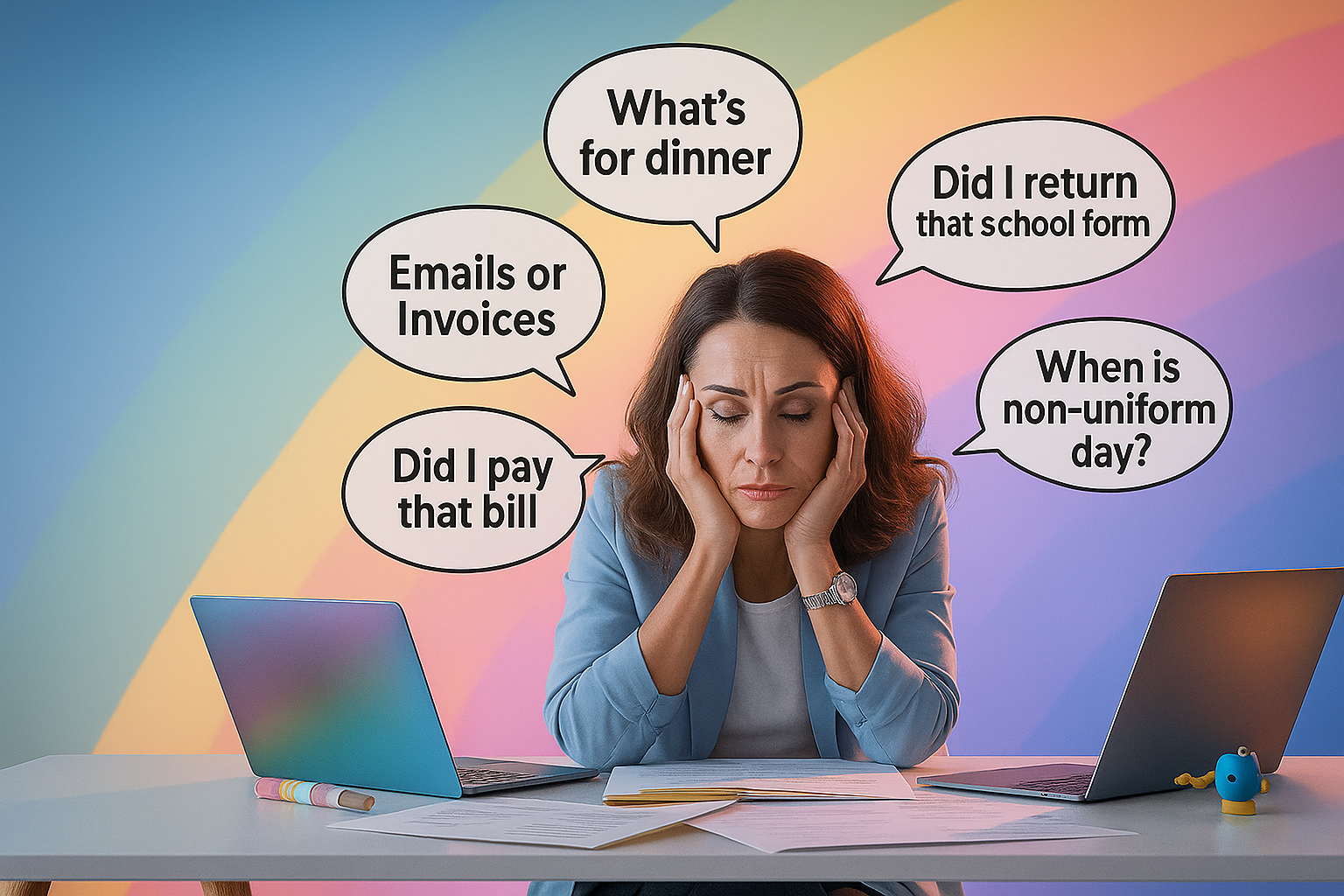
You’re spinning plates — school runs, client DMs, a toddler who protests carrots like it’s their job, and the eternal question: pasta or tacos, invoice or inbox, laundry or sleep?
By 3 p.m., your brain feels like twelve open tabs, all buffering.
You’re not broken — you’re just experiencing decision fatigue.
Decision fatigue is that slow mental exhaustion that builds from making too many choices in a day. Tiny calls count too — what to cook, what to wear, what to tackle first.
Each one drains your mental bandwidth — and you need that energy for your business and your kids.
The truth? As a mom running a business, you make more decisions before breakfast than most people make all day. You manage schedules, snacks, invoices, and emotions — then expect your brain to plan a launch. Naturally, it’s tired.
The good news: you can quiet the overwhelm and feel like yourself again. You don’t need a nanny, a color-coded fridge, or superhuman discipline. You need simpler routines, fewer choices, and kinder habits.
Less chaos. More calm. Let’s get your brain back.
In This Post, You’ll Learn How To:
✅ Spot the signs of decision fatigue (and what it’s really costing you)
✅ Simplify your day so you stop context switching
✅ Create easy defaults for meals, outfits, and work blocks
✅ Set guilt-free boundaries that protect your energy
✅ Recover focus fast — even on messy days
What Is Decision Fatigue and Why Does It Hit Moms So Hard?
Decision fatigue happens when your brain gets tired from making too many choices — leading to worse decisions or flat-out avoidance.
By noon, you’re tapped out. You either say yes to everything, eat cereal for lunch, or scroll instead of sending that invoice. You’re not lazy. Your brain is maxed out.
The Science in Plain English
Your willpower works like a muscle. Use it all morning on tiny calls, and it weakens by afternoon. When that muscle tires, you default to “easy” choices, procrastinate, or snap at the people who least deserve it.
Research on parents shows that routines and limiting choices really do help. They give your brain structure — so you save energy for what actually matters.
Want to learn a quick method to simplify decision-making?
Read Stress Less, Choose Faster: The 10-10-10 Method for Worry, Calm, and Focus — it pairs perfectly with this post.
Why Moms Building Businesses Feel It More
You’re making double the decisions — at home and at work — often at the same time.
You choose meals, nap schedules, dentist appointments, and then pivot to client calls, invoices, and whether to invest in that new tool.
You’re running two operating systems on one brain: home + business.
That context switching is draining. A meltdown, a Slack ping, a grocery order gone wrong — all of it eats into your focus.
Common decision overloads:
- Kid logistics: lunches, outfits, pickups, permission slips
- Business tasks: content plans, clients, cash flow, tools
- Self-care battles: sleep or dishes, workout or emails
By mid-afternoon, your mental tabs are all buffering.
What Decision Fatigue Looks Like In Real Life
You open the fridge and stare.
You write a caption, then delete it.
You say yes to a playdate you don’t even want.
That’s decision fatigue. It’s not laziness — it’s overload.
Signs your brain’s bandwidth is maxed out:
- You keep tweaking small business tasks instead of launching.
- You snap over the Lego or the wrong cup.
- You forget simple stuff like forms or follow-ups.
- You crave caffeine, cookies, or doomscrolling for relief.
- You spend 20 minutes choosing a font instead of making money.
None of this means you’re failing. It means your decision load is too high.
How Overwhelm Shows Up in Work and Parenting
Your two worlds blur together. You’re weighing homeschool activities while drafting sales emails. You’re toggling a school app while comparing email subject lines.
That’s like trying to run two apps on one tired phone. The battery dies faster.
Quick self-check:
When you sit to work, do you spend the first 10 minutes untangling family decisions in your head?
If yes — your decision buckets are leaking. You don’t need more willpower, you need clearer lanes.
Your Body Will Rat You Out First
Before your brain admits burnout, your body waves the flag:
- Tension headaches
- Jaw clenching
- Eye twitching
- Wired-but-tired energy
- Snappy mood swings
That’s your nervous system saying: enough choices for today.
Try this quick 1-day audit:
- Jot times you felt foggy or irritable
- Note what decision came right before
- Add any body signals you noticed
By dinner, you’ll see patterns — and power to fix them.
5 Practical Ways to Recover Mental Bandwidth
You don’t need a productivity overhaul — just fewer choices and better defaults.
1. Simplify Your Choices with Routines That Stick
Every routine is a decision you never have to make again.
Try:
- Capsule wardrobe: 7–10 mix-and-match pieces.
- Weekly meal rotation: tacos Tuesday, pasta Thursday, sheet-pan Sunday.
- Work rhythm: fixed days for content, admin, and sales.
- Kid bedtime ritual: same order nightly to cue calm.
Each one trims micro-decisions. Less friction, more peace.
2. Reclaim Energy with 5-Minute Reset Breaks
Short breaks reset your focus. Think tiny — not spa-day big.
Try:
- Box breathing: 4–4–4–4 pattern
- 3-minute phone-free walk
- Quick body scan during nap time
- Two-song stretch (bonus if you dance)
Better focus = better decisions.
3. Delegate and Automate Without Guilt
You can’t be CEO, chef, and chauffeur. Delete, delegate, or automate.
Home:
- Family chore chart (you review, not rescue)
- Grocery subscription for staples
- School forms folder, reviewed weekly
Business:
- Automate invoices and scheduling
- Use canned replies for FAQs
- Outsource one thing — bookkeeping, editing, or admin
Say it with me:
“That doesn’t fit my capacity this week.”
Boundaries protect bandwidth.
4. Default Decisions Save Sanity
Create one default for each high-stress area:
- Lunch: the same easy rotation
- Content: post one pillar, one promo per week
- Self-care: a 10-minute walk after dinner
Defaults remove the daily should I or shouldn’t I loop.
5. Use Frameworks That Help You Decide Faster
When big choices feel impossible, use a structure like:
- The 3-Option Rule (pick from only three viable options)
- The 10-10-10 Method (ask: will it matter in 10 days, 10 months, 10 years?)
These frameworks shrink mental noise and help you act faster.
Grab the Free Tools to Calm Your Overthinking
Decision fatigue and worry go hand in hand — so let’s tackle both.
Get my Worry Relief Journal, a 5-minute daily reset that trains your brain to stop spinning.
You’ll also receive my Decision Fatigue Cheatsheet, with the exact routines and prompts from this post.
👉 Download both here for free — simple tools, big relief.
Conclusion
You started this post with a brain full of open tabs and a kid negotiating over carrots. Now you know what’s really draining you — and how to refill that mental battery.
Less context switching. Kinder defaults. Clearer lanes.
Pick one thing to simplify this week — maybe your meal rotation or Monday work block — and see how much lighter you feel.
You’re not failing. You’re just overloaded. And overload is fixable.
You deserve focus, freedom, and a brain that feels like you again.
Now go — and DO THE THING. 💪